
Super freak
The best father on Father's Day

Sunday, June 21st, is Father’s Day.
A time to celebrate dear old dad. Sounds innocuous enough, right? Do something nice for dad the way you did for mom on Mother’s Day, right? Simple.
Unfortunately, the possibilities for this day to be as fraught with difficult memories as Mother’s Day are pretty substantial.
Here’s the problem, as I see it: We are not born with an Instruction Manual - either to be a good human, a good daughter, a good sibling, much less a good parent.
Someone is saying, “Well, there’s the Bible.”
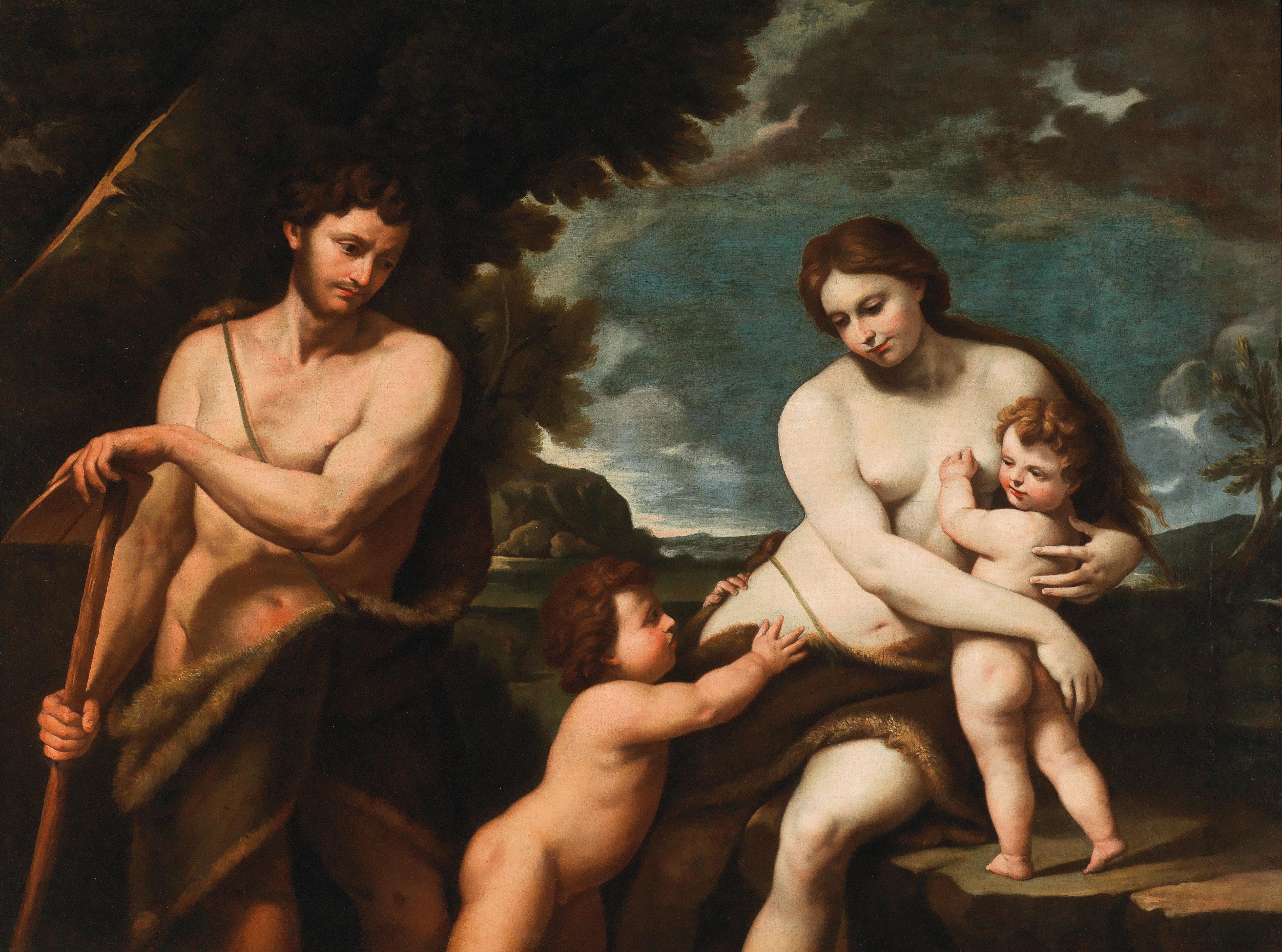
Well, let’s start with that scene in The Garden, shall we? You know, the one with the first family, who got themselves evicted for disobeying the rules? The story also includes lying, betrayal, and a model of shame and blame that families everywhere have been following for generations.
Jealousy and resentment pop up in the first generation, including sibling rivalry, anger, and wounded pride, which leads to Cain, the farmer, murdering his brother Abel, the shepherd, because he felt God favored his brother’s offering of sheep over his offering of crops.
You might ask, what were the parents doing when this was happening? Well, the Bible doesn’t say, but one can assume that, because Cain and Abel were likely adults, Adam and Eve were living their lives and/or tending to their other children.
Whatever Adam and Eve did or didn’t do to be “good parents,” it’s clear that they undoubtedly suffered a double heartbreak: the loss of Abel and the realization that their firstborn, Cain, was capable of murder.
As someone who has had the privilege of ministering to families, the pattern of the “good-child/bad-child” is painfully familiar.
I can’t tell you how many parents I’ve had in my office who have lamented, “We raised both of our children with the same principles and moral standards and expectations. I don’t understand why one is so ‘successful’ (read: living up to our expectations), and the other is (fill in the blank) … an alcoholic … a drug addict … divorced and remarried three times … verbally and physically abusive … delinquent on his alimony and child support … unemployed.”
Some of those “failures” are quick to shame and blame their parents. It’s biblical, after all. However, the truth is that some would be deserving of that assignment of blame. Some people are ill-equipped to be parents.
Sometimes, family history informs the process: abuse, addiction, emotional distance, unresolved childhood trauma, untreated mental health conditions, chronic poverty or socioeconomic hardship, and lack of health role models.
Other times, that very history inspires parents to ensure that the family pattern is broken and new, healthy patterns are established.
Sometimes, life - current reality - intrudes on the process of parenting: unexpected crisis or family tragedy, the birth of a severely handicapped child or one with chronic illness, financial stress, unemployment, substance abuse, mental health issues, recovery of memories of childhood trauma, divorce.
Again, those very issues can inspire the conviction to not be defeated by these enormous challenges and provide as healthy and stable an environment as possible.
So, what makes a good father? I think more of us can run off a list of what makes a bad father than what makes a good one.
We certainly have had some stylistic differences as well as some starkly different models of fatherhood in the “fathers of our country,” I’ve known as Presidents of the United States in my lifetime, the Current Occupant being the most obvious.
I’ve always wanted a father like Mr. Fred Rogers. I mean, seriously? Who wouldn’t? Well, okay, I’ve known a few personalities who probably would not have done so well in a “traditional family” like that.
Personally? I think the award for Father of the Year goes to Richard Hoover, the father in the 2006 movie “Little Miss Sunshine.”
Now, there’s a family that would never be painted by Norman Rockwell and depicted on the cover of The Saturday Evening Post.
Talk about your dysfunctional family! Oh, let us count the dysfunctions. Let’s see,
There’s Frank, the uncle (played by Steve Carell), who is a gay man and a Proust scholar who has a major depressive disorder, complete with suicidal ideations. In fact, he has just been released from confinement in a hospital after his partner left him and wears bandages on his wrists from his last attempt.
The grandfather, Edwin (played by Alan Arkin), struggles with heroin addiction, which ultimately leads to his fatal overdose during the family's road trip.
The mother, Sheryl (played by Toni Collette), struggles with emotional exhaustion, repression, and serious conflict avoidance. Like so many mothers, she is forced to suppress her own needs while absorbing everyone else's dysfunction.
The oldest, Dwayne (played by Paul Dano), has taken a vow of silence until he achieves his dream of becoming a US Air Force pilot. His silence isolates him from his chaotic family, and he finds solace in reading the nihilistic philosophy of Friedrich Nietzsche to cope with his frustrations. (He also discovers that he is colorblind, which leads to a breakthrough revelation, but you’ll have to watch the movie to see that happen.)
The youngest, Olive (played by Abigail Breslin, who wears a “fat suit”), is the star. She does not have a dysfunctional bone in her body. She is the emotional anchor and innocent beacon of hope who contrasts with her deeply troubled family.
Which leads us to the father, Richard (played by Greg Kinnear), who exhibits perfectionism and an obsession with "winning versus losing," often projecting his own fear of failure onto his wife and children.
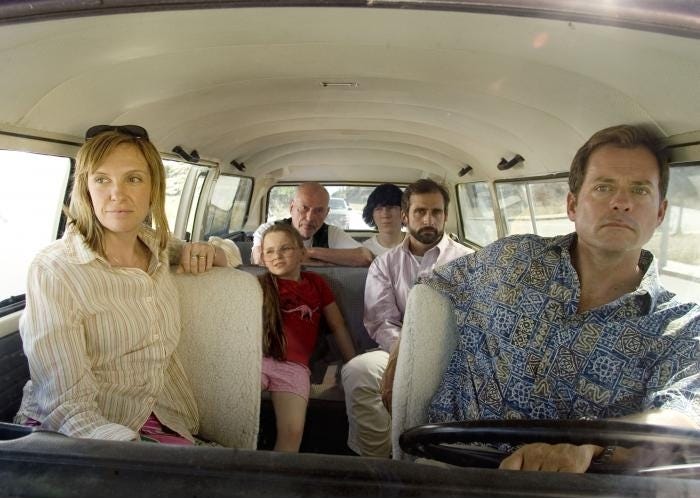
So, to review: major depressive disorder with suicidal ideations, heroin addiction, exhaustion, emotional repression, severe conflict avoidance, which we see emulated in her son’s vow of silence as protest, all topped off with perfectionism, obsession, and projection of fear of failure.
You know, just your ordinary American family. Okay, so it’s overdrawn, for sure, but it didn’t get nominated for four Oscars and win two because no one could relate.
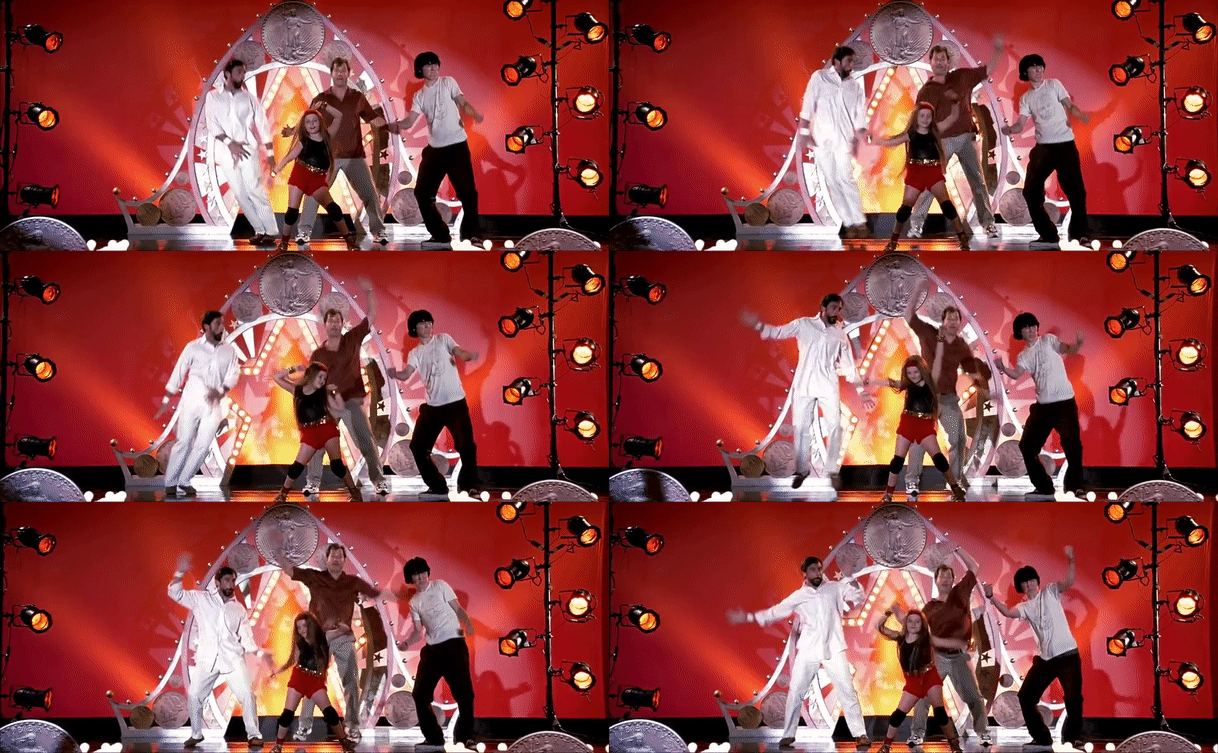
Why do I love this dad? It’s the dance scene.
It begins with Olive introducing herself and stating that she wants to dedicate her performance to her grandfather, “who showed me these moves.”
The MC says, “Oh, that’s so sweet. Where’s your grandpa right now?”
Olive says, “He’s in the trunk of the car.” (You’ll have to watch the movie.)
The dance scene at the end is an amazing scene of redemption for this family in general and this dad in particular.
It’s the triumph of love over social convention and expectations.
It’s the victory of acceptance of what is over the capitulation to what should be.
It’s the way courage and hope walk hand-in-hand when the peculiarities of a person are more important than a rigid adherence to blind compliance with what is “normal”.
Do yourself a favor tomorrow (or tonight, or anytime you’re feeling down about your own family of origin) and watch “Little Miss Sunshine.” It got 91% on Rotten Tomatoes, and you can find it on Netflix, Amazon Prime, Apple, Fandango at Home, YouTube, and Google Play Movies for about a $3.99 rental fee.
It really doesn’t matter if your father won Father of the Year or if he came in dead last.
It’s about the embrace of the “Super Freak” - the highly eccentric person in each of us (before Rick James nuanced the definition to include a sexually ‘kinky’ person).
It’s about understanding - eventually - that parenting sometimes means coloring outside of the lines. And, it’s about accepting that even broken crayons can still color - which includes yourself, your siblings, and yes, even “thy mother and thy father”.
It might even inspire you to forgive your father - or, love him even more.
Didn’t have a father present in your home? Well, hopefully you’ll find, like me, that there are alternatives to fathers like Mr. Rogers. And that, come to think of it, they’re not so bad, after all.
No one is beyond redemption.
A great piece on what's become a difficult day for me since losing my stepdad 2+ years ago. Thank you.
When He taught us to pray, Jesus began with the words, “Our Father.” That means something, I think . . . more than maybe we’ll ever know. There is at least one “good father,” and every child ever born can know Him. ❤️